

The $25,000 "Avoidance Tax": What Unspoken Tension Costs Your Organization
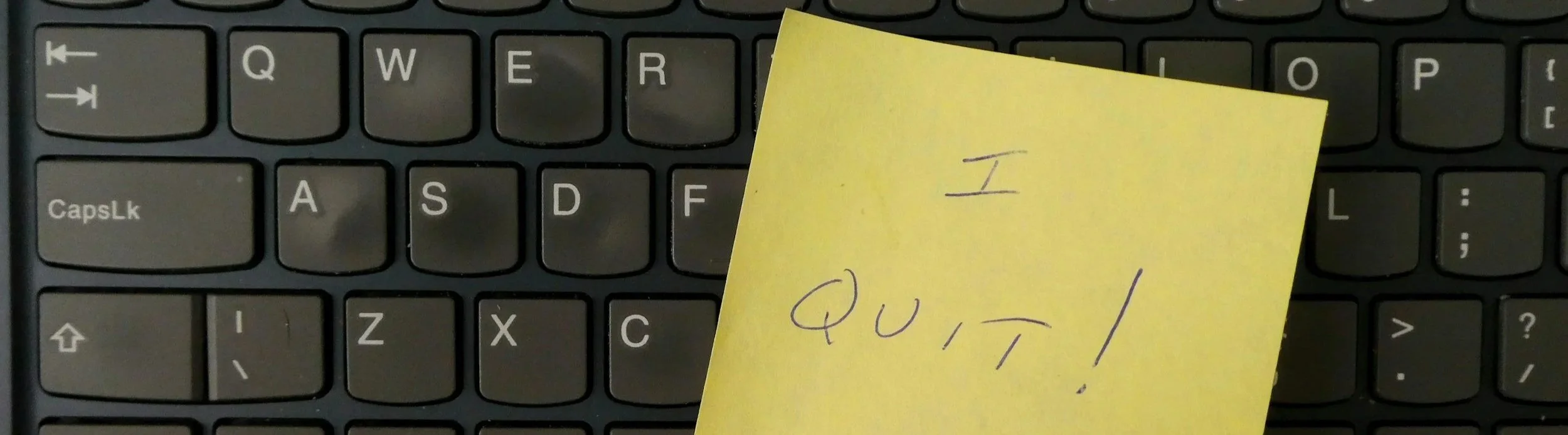
Difficult Conversations at Work: Why Halifax Managers Avoid Them | The Cyr Method
Difficult Conversations at Work: Why Halifax Managers Avoid Them and What It Costs
If you lead a team in Halifax or Dartmouth, you already know the conversation I am talking about.
The one you have been putting off for two weeks. The performance issue you have framed as "still developing." The vendor relationship where you keep accepting the same terms because renegotiating feels awkward. The team tension nobody has named out loud yet.
Most managers know the conversation needs to happen. They just lack the tools to have it without blowing something up.
That gap is a skills gap. And it is costing Halifax organizations more than most leaders realize.
Research from Crucial Learning found that one in three employees estimates their inability to speak up in a crucial moment has cost their organization at least $25,000
Fear Dressed Up as Decisiveness
I almost fired someone because I was scared.
New rep, thirty days in, no results. The company was bleeding money. Layoffs were looming. I had personally recruited him from a stable job, which made the pressure feel even heavier. On top of that, there was financial pressure, customer pressure, project pressure, and the weight of a dozen other things that make it easy to overlook one person's wellbeing and actually lead.
I told myself it was executive clarity.
Fear dressed up as decisiveness.
Before I made the call, something slowed me down. A voice that said: go and understand first.
So I sat down with him and asked four questions with a genuinely open mind:
How clear have I been with you?
What has blocked you from success?
Where have I fallen short as a leader?
Are you clear on the expectations, tools, support, and mission?
By the end of that conversation the truth was on the table. I had judged him before leading him. The problem was my leadership, not his ability.
I had almost cost a good person their job and their family's stability because I was rushing, assuming, and afraid.
We reset. One clear target. Weekly check-ins. Full support.
By the end of the second month he was leading our pipeline. Within three months he had closed over $100,000 in new revenue.
That moment reinforced something I carry into every difficult conversation now: stress and pressure enhance blind spots. And fear left unchecked can become cruelty, even when you believe you are being logical.
What Halifax Managers Say Instead of Having the Conversation
In discovery calls with team leaders across HRM, the same patterns come up.
"We are still figuring it out." The real issue has a name. It just has not been said yet.
"They know what is expected." The expectation was stated once and never confirmed.
"The numbers show they are not performing." The numbers show a result. They rarely show the cause. One of the most common situations I hear about is a manager expecting daily CRM updates while the sales rep has been doing them weekly. Every day the manager sees nothing and assumes disengagement. The rep is working hard and following what they thought was the agreement. One conversation would have surfaced that in five minutes. Instead it ran for weeks.
"It is not the right time." There is no plan for when the time will be right.
"I do not want to damage the relationship." The relationship is already strained and everyone knows it.
The avoided conversation does not disappear. It goes underground. It shows up as disengagement, quiet resentment, and eventually turnover or a deal that collapses at the worst possible moment.
Research from Crucial Learning found that one in three employees estimates their inability to speak up in a crucial moment has cost their organization at least $25,000. A separate study found that employees spend an average of 2.8 hours per week dealing with unresolved conflict — time that is paid and lost.
The off-ramps framework addresses exactly this — how to create exits from tension before it becomes a crisis. Those exits only work when someone is willing to name what is happening in the first place.
The Real Cost of Avoidance
Avoided conversations carry a direct financial cost.
A project manager who will not push back on an unrealistic client deadline commits the company to terms it cannot meet. A property manager who accepts a contractor's first bid because renegotiating feels uncomfortable loses margin on every unit turnover. A team lead who avoids a performance conversation for three months loses three months of output from someone who might have turned around in three weeks.
The cost of the conversation is always smaller than the cost of avoiding it.
This is what positions vs interests means in practice. Most avoided conversations are stuck at the position level — what each side has said out loud. The real issues, the interests underneath, stay buried until someone asks.
Chaning this pattern does not come over night or even with one or two workshops. However, I have worked with many clients on improving this and it almost always takes small consistant change and habit. Here is what change can look like.
A Tool You Can Use This Week: "Other Than"
Most managers hear one objection or concern and rush to solve it. Then another surfaces. Then another. Often the first concern was not even the real issue.
Two words that change this: Other Than.
When someone raises a concern — "the timing is off," "the budget is tight," "I am not sure this will work" — respond with:
"Thanks for sharing that. Other than [their concern], is there anything else holding us back right now?"
If they say yes, pull it out. Add it to the list. Then ask again.
"Other than [concern one] and [concern two], is there anything else preventing us from moving forward?"
Repeat until they say no, that is everything. Then confirm it:
"So it sounds like if we work through these together, we can move forward. Is that what you are saying?"
Getting every concern on the table is the work. Once everything is visible, you can move toward a solution together. Very often, not every concern needs a resolution for things to move forward — some dissolve once they are named.
This works in performance conversations, vendor negotiations, team disagreements, and any collaborative process that has hit friction.
The Clarity Check-In
When tension is rising in a team or a relationship, run a clarity check-in. The same four questions I asked that rep apply to any high-pressure moment.
Ask these and mean them:
How clear have I been about what success looks like here?
What has blocked you from getting there?
Where have I fallen short as a leader or partner in this?
Are you clear on what you need from me to move forward?
The goal is curiosity before decisiveness. Curiosity in negotiation is strategic. It surfaces the real issue faster than any amount of pressure ever will.
Gallup research confirms that one meaningful conversation per week with each team member drives higher performance than any other single leadership activity. The clarity check-in is that conversation.
If team member followthrough is an issue. I wrote an articel on how to handle that too.
What Gets in the Way
Two things stop Halifax managers from having difficult conversations well.
The first is the belief that raising a hard topic will damage the relationship. Relationships erode from unspoken tension, not from honest conversations handled with care. Boundaries and requests are the infrastructure of a functional team. Setting them clearly is an act of respect.
The second is having no structure to follow when the conversation gets uncomfortable. Without a framework, most people either over-explain, go quiet, or default to a fixed position. All three make things worse.
Structure is what makes curiosity possible under pressure. When you know your next move, you stay present instead of defensive.
Building a Team That Can Have Hard Conversations
The organizations in HRM that retain good people and close deals that last are the ones that have built the skill of working through difficulty. VitalSmarts research found that 67% of employees report their productivity suffers significantly when issues stay unresolved. The cost compounds quietly until it becomes impossible to ignore.
That capability is trainable. It requires a shared language, a few reliable tools, and enough practice that the skills hold under pressure.
If your team is avoiding conversations that need to happen, that pattern is worth addressing before it compounds further.
If this sounds like your team, the Work With Me page explains how we audit what's actually happening, fix what's stalled, and keep it from happening again.
Sources
Crucial Learning: Costly Conversations Research (2022) — One in three employees estimates their silence has cost their organization at least $25,000
CPP Inc / Myers-Briggs: Workplace Conflict Study — Employees spend an average of 2.8 hours per week dealing with unresolved workplace conflict
Gallup: State of the Global Workplace — One meaningful conversation per week with each team member drives higher performance than any other single leadership activity
VitalSmarts (2017): State of the Workplace Survey — 67% of employees report their productivity suffers significantly when issues remain unresolved